

What Happens When Magnets Meet Steel?
Permanent magnets and steel are often used together in holding devices, motor structures, magnetic sensors, steel-backed components, and many other engineered products. In simple terms, permanent magnets can attract steel because many steels can be magnetized by the magnetic field. However, steel parts are not just passive objects being pulled by magnets. They can also change how the magnetic field is distributed around the magnets.
When permanent magnets are placed near suitable steel, the steel provides an easier path for magnetic flux than air. This can make the magnetic field more concentrated in certain areas and can increase useful attraction force under the right conditions. This is why magnets may show stronger holding force when they work against proper steel plates, steel housings, or back iron structures.
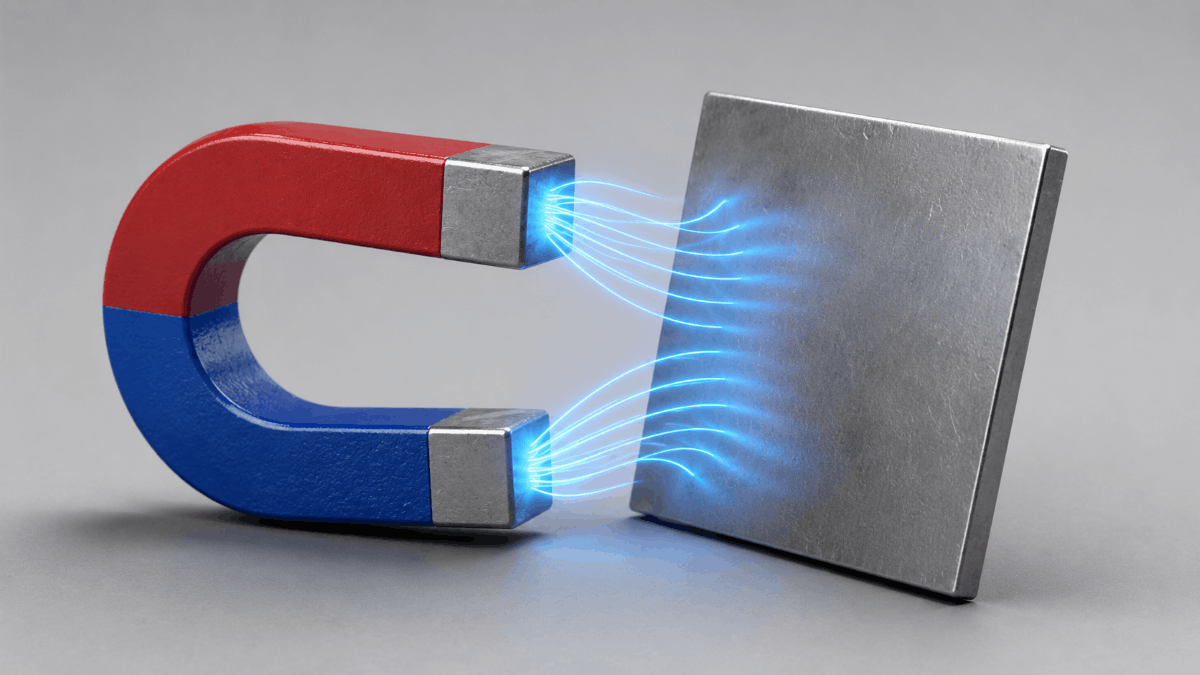
At the same time, steel can also redirect magnetic flux. Steel parts may strengthen the field on one side of magnets while reducing leakage on another side. In other cases, they may change the field shape, measurement result, or working distance. For this reason, the performance of permanent magnets and steel should be reviewed as a magnetic system, not only as a magnet property.
The final result depends on steel material, thickness, contact area, air gap, coating, surface condition, and force direction. Thicker or larger steel parts do not always mean stronger magnetic performance. Once steel can already carry the required magnetic flux, other limits such as saturation, air gaps, or mechanical design may become more important.
Not All Steel Responds to Magnetic Fields in the Same Way
Although permanent magnets and steel are often discussed together, steel is not one single magnetic material. Different steels can respond very differently to magnetic fields, depending on their composition, microstructure, processing method, and heat treatment. This is why two steel parts with similar appearance may show very different attraction, flux guidance, or magnetic holding performance.
Low carbon steel and mild steel are commonly used in magnetic circuits because they usually have good magnetic permeability and can provide an effective path for magnetic flux. In many holding devices, yokes, back plates, and steel housings, this type of steel helps guide magnetic flux and improve useful attraction force.
Ferritic stainless steels are generally magnetic because their structure allows them to respond clearly to magnetic fields. Martensitic stainless steels are also usually magnetic, but their magnetic behavior can be affected by hardness, heat treatment, and alloy content. They may not behave exactly like low carbon steel in a magnetic circuit.
Austenitic stainless steels, such as 304 and 316, are usually much less magnetic in the annealed condition. However, they may become slightly magnetic after cold working, bending, cutting, stamping, or machining. For this reason, stainless steel parts should not be judged only by the material name. The actual magnetic response may depend on both the grade and the manufacturing process.
For magnetic design, the important point is simple: steel selection matters. If steel parts are expected to act as return paths, back iron, yokes, or magnetic housings, their magnetic permeability should be considered together with thickness, shape, saturation, and the required working field. In permanent magnets and steel designs, choosing the wrong steel may reduce attraction force, change the field distribution, or make the magnetic circuit less predictable.
How Steel Guides Magnetic Flux?
In permanent magnets and steel designs, steel parts often do more than provide mechanical support. Because suitable steels have much higher magnetic permeability than air, they can provide easier paths for magnetic flux. This is one of the main reasons steel can increase useful attraction force in some magnetic structures.
Without steel, magnetic flux must pass through air around the magnets. Air has high magnetic resistance, so more flux may spread outward or become less useful for the working surface. When proper steel is added behind, around, or opposite the magnets, part of the flux can be guided through the steel instead of leaking through open air.
This does not mean steel simply makes magnets “stronger.” The magnets themselves do not gain more magnetic energy. Instead, steel changes how the existing magnetic field is used. It can concentrate flux toward the working side, provide return paths, and reduce unwanted leakage in certain directions. As a result, the same magnets may show different holding force, surface field, or sensing behavior when steel parts are added.
This effect is especially important in magnetic holding devices, steel-backed components, magnetic couplings, motor structures, and sensor-related designs. In these applications, the useful magnetic field depends not only on magnet grade or size, but also on how steel parts guide, close, or redirect the magnetic circuit.
However, steel flux paths must be designed carefully. If steel parts are too thin, too narrow, poorly positioned, or made from low-permeability material, they may not carry the required flux effectively. In some cases, they may even change the field in an unwanted direction. For this reason, permanent magnets and steel should be reviewed together as one magnetic circuit rather than as separate parts.
Back Iron, Yokes, and Steel Housings
In permanent magnets and steel designs, steel parts are often used to control where magnetic flux goes. Back iron, yokes, and steel housings may look like simple support structures, but they can become important parts of the magnetic circuit.
Back iron usually refers to steel placed behind magnets. Its main function is to provide a return path for magnetic flux and reduce unwanted leakage on the back side. When designed properly, back iron can help direct more useful flux toward the working side of the magnets. This is common in holding devices, magnetic bases, motor structures, and steel-backed components.
Yokes are used to connect magnetic poles and guide flux through a more complete magnetic circuit. Compared with simple back plates, yokes usually play a more active role in shaping the magnetic path. They can help close the magnetic circuit, improve flux utilization, and create stronger or more controlled fields in selected working areas.
Steel housings can provide both mechanical protection and magnetic function. In holding devices, for example, steel housings can protect brittle magnets while also redirecting magnetic flux toward the open contact face. This is why housed magnets may show very different holding behavior from exposed magnets of similar size.
However, these steel parts do not improve every magnetic field in every direction. They may strengthen the useful field on one side while reducing leakage or field strength elsewhere. For this reason, back iron, yokes, and steel housings should be reviewed according to the required working surface, field direction, air gap, steel thickness, and saturation risk.
Steel Thickness and Magnetic Saturation
Steel thickness is an important factor in permanent magnets and steel designs. When steel parts are used as back iron, yokes, housings, or target plates, they need enough cross-sectional area to carry magnetic flux. If the steel is too thin, too narrow, or poorly shaped, it may become a limiting part of the magnetic circuit.
Magnetic saturation occurs when steel can no longer carry significantly more magnetic flux. Before saturation, increasing steel thickness may help improve the magnetic flux path and increase useful attraction force. After the steel is already sufficient for the required flux, adding more thickness usually brings much less improvement.
This is why thicker steel does not always mean stronger magnetic performance. In many cases, the holding force or working field may be limited by air gaps, contact area, surface flatness, coatings, magnet size, pole area, or loading direction rather than steel thickness alone. A thick steel plate with poor contact can still perform worse than a thinner but better-positioned steel part.
The required steel thickness also depends on the magnetic structure. Steel behind magnets may need to carry return flux. Steel housings may need to redirect flux toward the contact face. Yokes may need enough section area to connect poles without reaching saturation too early. For this reason, steel thickness should be reviewed together with the full magnetic circuit, not as an isolated dimension.
In practical permanent magnets and steel applications, the best steel thickness is usually the point where the steel can carry the required flux without unnecessary weight, cost, or size. Beyond that point, improving air gap control, contact quality, geometry, or magnet arrangement may be more effective than simply making steel parts thicker.
Practical Limits of Steel in Permanent Magnet Designs
Steel can improve magnetic performance in many permanent magnets and steel designs, but it does not remove all practical limits. Magnetic force is affected by the whole structure, not only by magnet grade or steel thickness.
Air gaps are one of the most common limits. Even thin layers of paint, coating, adhesive, plastic, rust, or uneven surface contact can reduce holding force. When magnets and steel parts do not contact properly, the magnetic circuit becomes less efficient, and the expected improvement from steel may not be fully achieved.
Surface area and loading direction also matter. Pull force measured perpendicular to steel surfaces is different from shear force along the surface. In many real products, magnets may need to resist sliding, vibration, impact, or repeated movement. In these cases, mechanical design, friction, positioning features, and safety factors may be just as important as magnetic attraction.
Steel shape can also change the result. Sharp corners, narrow sections, thin walls, holes, and local bottlenecks may limit magnetic flux or create uneven field distribution. If steel parts are used near sensors, moving parts, or other magnets, they may also redirect the field in ways that affect measurement accuracy or working clearance.
For this reason, permanent magnets and steel should be reviewed as one magnetic system. Steel can guide flux, increase useful attraction, reduce leakage, and protect magnets, but the final performance still depends on material selection, geometry, air gap control, contact condition, saturation, and the actual working direction of force.


